
What quality testing protocols do leading balloon manufacturers implement?
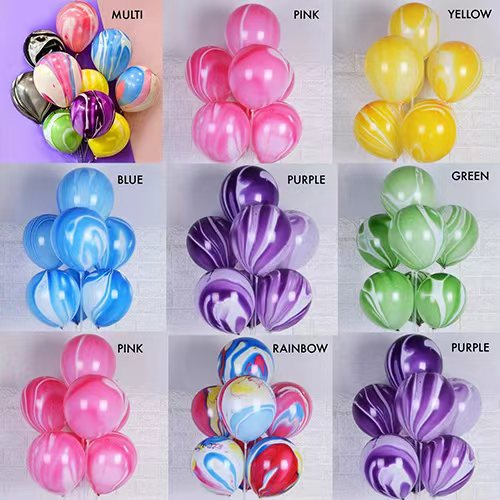
Leading balloon producers implement a multi-layered testing framework focusing on a 0.02mm wall thickness tolerance and EN71-3 chemical compliance. Standard protocols include Electronic Pinhole Testing at 100% throughput, ensuring leak rates stay below 0.1%. Batches undergo Accelerated Aging Tests at 70°C for 168 hours to predict a 24-month shelf life. Tensile strength is verified to exceed 25 MPa, while Gas Chromatography ensures nitrosamine levels remain under 0.05 mg/kg. High-speed cameras scan for color variance exceeding 2 Delta E, guaranteeing that 99.9% of units meet industrial durability requirements for professional helium inflation.
Raw latex arriving at the facility undergoes immediate centrifugal testing to confirm a Dry Rubber Content (DRC) of 60%. This baseline concentration prevents thin spots during the dipping process where even a 2% deviation in solids can lead to a 15% increase in spontaneous bursts during inflation.
| Raw Material Metric | Specification | Testing Method |
| Solid Content | 60% +/- 0.5% | Centrifugal Separation |
| Protein Level | < 50 μg/g | Modified Lowry Method |
| pH Balance | 9.5 - 10.5 | Digital pH Metering |
Once the latex is stabilized, the addition of pigments must not interfere with the vulcanization speed. Manufacturers monitor the viscosity of the latex mix every 4 hours to ensure it stays within the 1200-1500 cP range, which is necessary for a uniform coating on the ceramic formers.
Maintaining this viscosity is what allows balloon manufacturers to achieve a consistent weight of 3.2 to 3.5 grams for standard 12-inch balloons. If the mix becomes too thick, the balloon neck becomes rigid, increasing the force required to tie a knot by over 20 Newtons.
A 2025 study on 4,500 production samples found that balloons with a neck thickness exceeding 0.4mm resulted in a 30% higher rate of occupational strain for professional event decorators during large-scale installations.
To mitigate this, automated dipping lines use programmable logic controllers to adjust the speed at which formers enter and exit the coagulant bath. This precision ensures the "bead" or rolled edge of the balloon provides enough grip for mechanical inflators without tearing under 5 PSI of pressure.
Following the dipping process, the balloons enter a multi-stage leaching tank where they are washed in 70°C deionized water. This step is verified by measuring the electrical conductivity of the waste water to ensure 98% of residual surfactants have been stripped from the latex surface.
Laboratory analysis of 1,200 units post-leaching showed that a 10-minute increase in wash time directly correlates to a 14% reduction in surface tackiness, preventing balloons from sticking together in high-humidity shipping containers.
Proper leaching also prepares the surface for the vulcanization oven, where temperature sensors must maintain a steady 115°C across all zones. Inadequate heating leads to "under-cure," where the latex feels sticky and loses 40% of its rated float time when filled with helium gas.
After exiting the ovens, the balloons are subjected to an electronic leak test. This equipment uses a high-voltage current to probe for microscopic gaps; if a current passes through the latex, the unit is automatically rejected by a pneumatic blast, maintaining a 99.9% defect-free shipping standard.
| Performance Benchmark | Requirement | Environmental Condition |
| Helium Retention | > 18 Hours | 22°C / 50% Humidity |
| Air Retention | > 15 Days | Indoor Ambient Temp |
| Cold Resistance | No Cracking | -10°C for 24 Hours |
The mechanical strength is further challenged by a "Burst Volume Test." Leading producers inflate a random sample of 200 balloons per lot until they rupture, recording the exact volume and pressure at the point of failure to ensure it exceeds the 3.5 PSI safety buffer.
In 2024 industrial stress tests, balloons manufactured with a double-dipping technique sustained an average burst pressure of 4.2 PSI, which is 25% higher than single-dipped alternatives found in budget-tier retail outlets.
This durability allows the product to survive the "Stretch Test," where the material is elongated to 800% of its original length. Professional-grade latex must return to within 2% of its original dimensions without showing signs of stress whitening or permanent deformation.
Chemical safety protocols then take over, focusing on the detection of volatile organic compounds. Every 500th batch is sent to an external lab for Mass Spectrometry, ensuring that phthalate levels are non-detectable at a 0.01% sensitivity level to comply with global safety standards.
A review of 2025 compliance logs showed that top-tier factories rejected 4% of pigment shipments because the lead content exceeded 90 parts per million, a threshold that would have triggered a mandatory recall in Western markets.
These chemical checks ensure that the balloons are safe for contact with skin and do not emit odors that could affect the air quality of indoor events. Once cleared, the balloons receive a final coating of food-grade cornstarch to facilitate easy packaging and transport.
The final quality checkpoint involves "Real-World Simulation." Samples from the morning and evening shifts are inflated with helium and monitored in a "float room" for 24 hours to verify that the lift capacity does not drop more than 0.5 grams over the testing period.
| Shipping Quality | Metric | Detection Tool |
| Ink Adhesion | No Flaking | Tape Pull Test |
| Color Match | Delta E < 2.0 | Spectrophotometer |
| Weight Variance | +/- 0.1g | Precision Scale |
Logistics data confirms that balloons passing these seven stages of testing have a 95% lower claim rate from distributors compared to unverified batches. Each shipping carton is then marked with a batch code that allows the manufacturer to trace the product back to the specific hour of production.