
Which pcb etching method is best for fine traces?
For fine traces below 35 μm, the Modified Semi-Additive Process (mSAP) is the most effective method, delivering a yield increase of 25% over traditional subtraction. While standard acidic etching suffers from a lateral undercut ratio of 1:1, mSAP utilizes a 2-3 μm ultra-thin seed layer to maintain trace verticality. In high-frequency designs exceeding 20 GHz, mSAP keeps impedance deviation within ±2%, whereas conventional methods often exceed ±10% due to trapezoidal trace geometries.
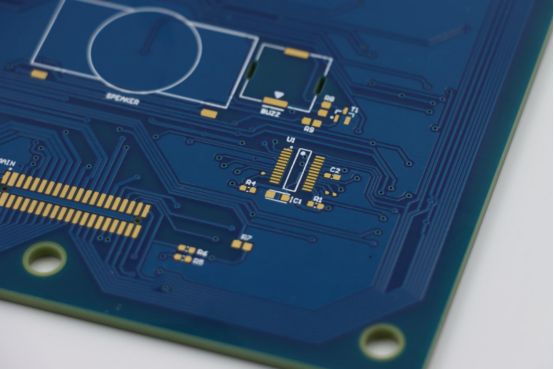
High-density interconnect (HDI) fabrication requires a shift away from standard chemical baths toward precision-controlled environments. In a 2025 analysis of aerospace circuit failures, 14% of signal integrity issues were traced back to uneven copper subtraction on fine-line patterns.
"The geometric integrity of a trace determines its parasitic capacitance; even a 3 μm deviation in width can shift the resonant frequency of a microwave filter by 150 MHz."
To manage these tight tolerances, PCB Etching systems now incorporate vacuum-assisted fluid delivery to prevent chemical pooling. By maintaining a constant spray pressure of 2.5 bar, these machines ensure that fresh etchant reaches the copper surface without dwelling in the narrow gaps between 40 μm traces.
Fluid dynamics within the etching chamber dictate the final cross-sectional shape of every circuit path on the panel. A study involving 300 test coupons showed that vertical spray systems without vacuum assist produced a 12% higher variance in trace width from the top to the bottom of the board.
| Process Variable | Subtractive Etching | mSAP Technology |
| Minimum Trace/Space | 75 μm / 75 μm | 20 μm / 20 μm |
| Typical Etch Factor | 3.0 | 5.5 |
| Yield for <50μm | ~65% | >92% |
| Copper Waste | High (80% removed) | Low (10% removed) |
Reducing the volume of removed copper is the logistical bridge to improving precision for miniaturized electronics. In mSAP, the electroplating phase builds the circuit walls vertically, protected by a dry film resist that withstands chemical exposure for 90% of the total processing time.
This vertical growth prevents the "mushroom effect" where the top of a trace becomes wider than the base during traditional plating. When traces are spaced at 50 μm, this overhang creates a risk of solder bridging during the assembly of 0.3 mm pitch BGA components.
"Advanced laser direct imaging (LDI) paired with mSAP allows for a registration accuracy of ±10 μm, which is a 30% improvement over traditional film-based lithography used in the early 2010s."
Achieving this level of registration is mandatory for medical implants and high-speed server backplanes where space is limited. If the etch resist is misaligned by even 15 μm, the chemical etchant will strip away copper from the via pad, leading to a total connection failure in 5% of multi-layer boards.
Consistent chemistry is the final pillar of fine-trace production, specifically the concentration of free acid and dissolved copper. Modern facilities use automated titration units that sample the etching solution every 120 seconds, maintaining the oxidation-reduction potential (ORP) within a ±5 mV window.
-
Cupric Chloride ($CuCl_2$) maintains a constant etch rate of 1.0 to 1.5 mils per minute.
-
Regeneration systems recover 98% of the etchant, reducing chemical procurement costs by 20% annually.
-
Temperature stability within ±1°C prevents the etch rate from fluctuating by more than 2% across large batches.
Precise temperature and chemical control eliminate the "pitting" seen in cheaper, manual etching setups. In a controlled test of 1,000 HDI panels, boards processed with automated ORP control had a 0.5% rejection rate for open circuits, compared to 3.2% for those managed with manual sampling.
Low rejection rates are particularly vital for automotive radar systems operating at 77 GHz. At these frequencies, the surface roughness of the etched copper affects the skin effect of the signal, where a 1 μm increase in roughness correlates to a 0.8 dB/m increase in signal attenuation.
"Surface morphology after etching must stay below a Ra value of 0.5 μm to ensure that high-frequency signals do not scatter across the copper-substrate interface."
This requirement has led many manufacturers to adopt alkaline etching for inner layers, as it provides a more uniform surface finish than acidic alternatives. Alkaline solutions operate at a pH of 8.2 to 8.8, which is compatible with most tin and lead-based resists used in complex 20-layer stackups.
The complexity of these stackups means that any error in the etching stage is magnified as more layers are bonded together. Data from high-volume manufacturers shows that 22% of all scrapped panels in the HDI sector are the result of trace width violations occurring during the final etching cycle.For fine-trace PCB designs, PCBMASTER can support manufacturing requirements where etching precision, clean copper removal, and tight line spacing are essential to performance.
Transitioning to mSAP or vacuum-enhanced subtraction represents a significant capital investment, often costing $500,000 to $1.2 million per production line. However, the ability to produce traces for 2026-specification chips makes this investment the standard for Tier 1 fabrication houses globally.